


Across the United States, school safety has become one of the most urgent challenges of our time, with districts and parents constantly searching for ways to protect students from threats that can unfold in mere moments. Now, technology is stepping in to provide answers. In a pioneering move, the Glassboro Public School District in New Jersey has become the first in the country to adopt an artificial intelligence-powered gun detection system that works hand in hand with an instant mass communication platform. This integration is designed to detect weapons faster than the human eye, verify potential threats within seconds, and immediately send alerts to staff, students, and law enforcement, giving schools a critical advantage in situations where every second counts.
The system relies on ZeroEyes, an AI video analytics platform that connects directly to the district’s existing security cameras. Its role is to continuously scan footage for visible firearms, recognizing potential threats before most people would even notice them. What makes this system particularly unique is the way it blends artificial intelligence with human expertise. Instead of sending out alarms based solely on algorithms, ZeroEyes forwards any flagged footage to a 24/7 operations center staffed by military and law enforcement veterans. These human experts review the images in real time, ensuring that false alerts are minimized and that only credible threats trigger the next step. If the weapon is confirmed as real, an alert is dispatched within three to five seconds, notifying school administrators, teachers, and law enforcement, while at the same time initiating an automatic lockdown of the building. This rapid response mechanism is designed to create a protective buffer of time that can make the difference between tragedy and prevention.
Complementing this detection system is Singlewire Software’s InformaCast platform, which serves as the communication backbone of the entire process. Once a verified threat is detected, InformaCast pushes out alerts instantly across multiple channels—school PA systems, strobe lights, desk phones, digital signage, mobile devices, and other connected tools—ensuring that the warning reaches everyone on campus without delay. By merging detection and communication into one fluid process, the system closes the critical gap between identifying a threat and acting on it. In an environment where seconds can decide outcomes, this seamless coordination transforms how schools can respond to emergencies.
The practicality of the system lies in its simplicity and speed. Security cameras already in place within schools feed continuous video into the AI platform. When the system spots what it identifies as a firearm, the footage is quickly highlighted and escalated to analysts. Once confirmed, the alert ripples through every communication channel simultaneously, giving teachers instructions, notifying students, and bringing law enforcement directly into the loop. This reduces the response time dramatically, meaning schools no longer have to rely on the delayed relay of information that has historically slowed down emergency actions. Instead, the reaction is almost immediate, and that speed can help contain threats before they escalate.
Of course, as with any major innovation, there are challenges that must be addressed. AI, even with human oversight, is not infallible. False alerts remain a possibility, and although analysts provide a safeguard, the system is not completely immune from mistakes. Privacy is another concern, since the technology depends on continuous monitoring of school environments, raising questions about how student and staff data is stored and protected. Cost is also a significant factor, as implementing these systems involves not only installing and maintaining the technology but also training staff to operate it effectively. For many districts already struggling with tight budgets, this could be a hurdle. And equally important is the matter of trust. Parents, teachers, and students must be reassured that this technology is not simply another layer of surveillance but a genuine safety measure. Building confidence through transparency, communication, and practice drills will be essential for its acceptance.
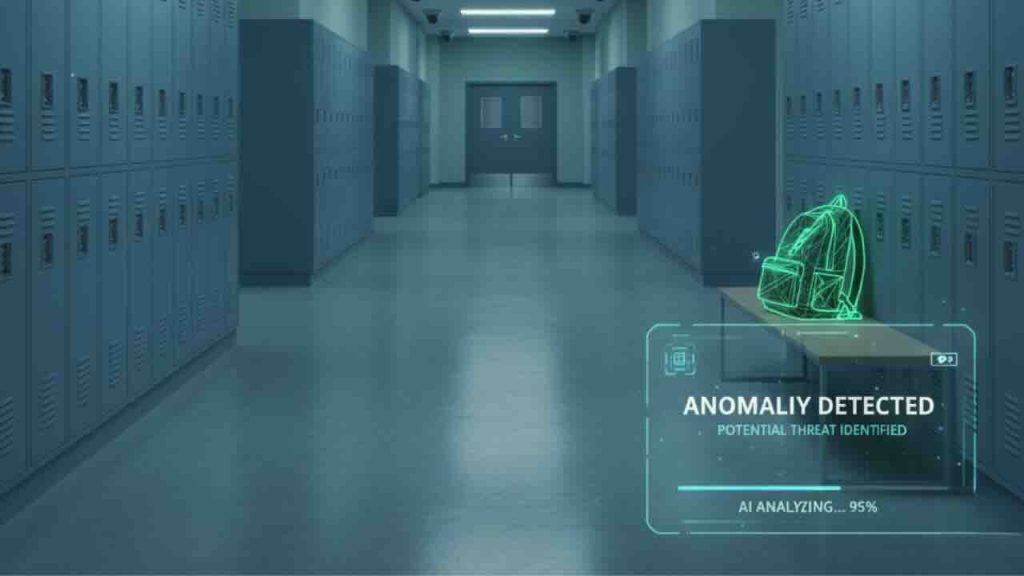
Yet despite these concerns, the benefits of integrating AI into school safety measures are undeniable. For parents, it represents peace of mind, knowing that threats can be identified almost instantly and that law enforcement is brought into action without delay. For teachers and students, it ensures clear instructions during a crisis, reducing panic and confusion while providing reassurance that the school has a structured plan in place. The system creates a layered defense by combining constant surveillance, real-time AI detection, human judgment, and instant communication, offering a stronger safety net than any single method could provide on its own.
The Glassboro initiative illustrates a turning point in how schools can embrace technology to address one of the most serious dangers of modern education. It shows that while no single solution can guarantee complete safety, adopting tools that compress the timeline between detection and response can significantly reduce risks. Every moment gained is an opportunity to protect lives, and by bringing together artificial intelligence, trained human oversight, and rapid communication, schools are moving from reactive strategies to proactive defenses.
The broader implications are clear. As more districts observe the results of this rollout, interest in AI-powered security solutions is likely to grow. The technology may evolve to become more affordable and widespread, eventually becoming a standard part of school infrastructure. And while debates around privacy, funding, and reliability will continue, what cannot be ignored is that schools are actively seeking ways to stay ahead of threats. In an era where safety is paramount, the integration of AI gun detection and communication platforms represents not just an investment in technology but an investment in saving lives.
For now, Glassboro has taken a bold step forward, setting an example for other districts across the country. By combining vigilance with innovation, they are demonstrating that schools can embrace the tools of the future to meet the urgent challenges of the present. And while no system can eliminate every danger, this approach creates a new level of preparedness that brings hope to parents, confidence to teachers, and, most importantly, protection to students who deserve to learn in safety.


0 Responses
No responses yet. Be the first to comment!